A Commission, Beginning to End
A full bespoke suit at L&S involves three fittings, six to eight weeks, and hundreds of individual decisions. Here is exactly what the process looks like.
A commission begins with a conversation. You come to the workshop on East 61st Street and we spend an hour together — measuring, looking at cloth, discussing what the suit is for and what you already own. No tools come out in the first ten minutes. We want to understand the context before we start taking numbers. If this is a first suit, the conversation will be broad: what kind of work do you do, where do you wear a jacket, what has never fit you well in the past? If you are returning for a third or fourth commission, the conversation is faster and more specific. We already know your body and your taste. We are refining an understanding that grows with every garment.
The Initial Consultation and Measurements
Once we have a clear picture, the measurements are taken — approximately thirty in total, including the individually sloped shoulders, the two chest circumferences, the precise rise from waistband to crotch, the back and front lengths measured separately. These are not the six or seven measurements a made-to-measure house would take. They are a full accounting of your body's geometry. We measure the pitch of your shoulder — the angle at which it slopes from neck to arm. We measure the hollow of your back, the prominence of your chest, the sweep of your posture. We measure how you stand naturally, not how you stand when told to stand straight.

A bespoke pattern is then drafted by hand from these numbers alone. No base block is adjusted. The pattern that results could not be used for anyone else, because it was drawn from geometry that belongs to you. This is the foundational difference between bespoke and made-to-measure. Made-to-measure starts with a standard pattern and modifies it based on your measurements. Bespoke starts with your measurements and drafts a pattern from scratch. The former is adjustment. The latter is creation.
The Cloth Selection
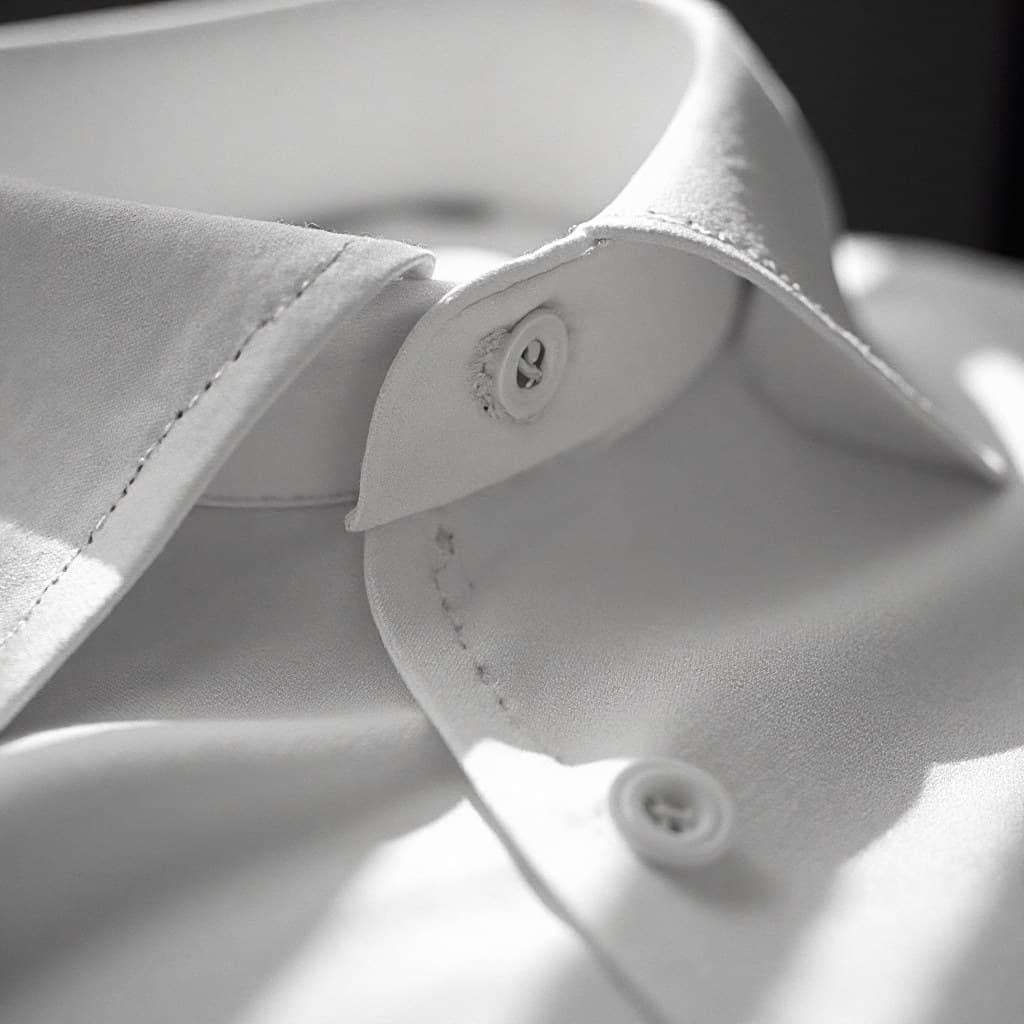
While the pattern is being drafted — a process that takes several days — you will have chosen your cloth. We maintain relationships with English, Italian, and Scottish mills, and carry a rotating inventory of approximately three hundred fabrics in the workshop at any given time. These are not swatches or samples. They are full bolts. You will handle the cloth, drape it over your shoulder, see how it behaves in natural light. Weight, texture, drape, and colour are all decisions that affect not just how the suit looks but how it wears. A heavy tweed moves differently than a lightweight tropical worsted. A plain weave behaves differently than a herringbone. These are not academic distinctions. They are practical ones.
The cloth is not cut until the first fitting confirms the pattern is correct. This is insurance against waste and against error. Cutting the cloth is the irreversible step. Everything before it can be adjusted.
First Fitting: The Basted Shell
The first fitting is on a basted shell — a rough assembly of the jacket and trousers, held together with long white tacking stitches, in a plain canvas or a remnant of similar weight to your final cloth. It looks nothing like a finished suit. The lining is absent. The pockets are marked but not cut. The sleeves may be pinned in place rather than sewn. The purpose is to test the pattern on your body in three dimensions before we commit to the actual cloth.
We check every seam, every angle, every proportion. Does the shoulder seam sit at the edge of your shoulder, or is it riding slightly forward? Does the collar hug your neck, or is there a gap at the nape? Does the chest have enough room through the front but not so much that it bags at the sides? Is the jacket long enough to cover your seat but not so long that it overwhelms your legs? These are questions that can only be answered by seeing the pattern on your body, and they are why the basted fitting exists. Adjustments are marked in chalk and cut back into the pattern before construction begins in earnest.
This fitting typically takes thirty to forty-five minutes. It is not glamorous. You are standing in front of a mirror in a rough canvas jacket that may have chalk marks and pins protruding from it. But it is the most important fitting of the three, because it is the last chance to correct the pattern before the cloth is cut.
Second Fitting: The Forward
The second fitting — sometimes called the forward fitting — takes place on the nearly completed garment. The cloth has been cut, the canvas basted into the chest, the lining tacked in place. The buttonholes have not yet been cut. At this point the suit is recognisable as a suit, and most of the fit adjustments should already be resolved from the basted fitting.
What we are checking here is the fine tuning: the precise set of the sleeve, the final length of the jacket, the break of the trouser, the way the collar rolls. We are also checking how the cloth behaves now that it is on your body. Some fabrics have more give than others. Some drape differently than they appeared on the bolt. The forward fitting is where these behaviours reveal themselves, and where we make the final micro-adjustments before the suit is completed. Minor chalk marks are made and transferred to the pattern. By the time you leave this fitting, both you and we know what the finished garment will look like.
Final Delivery
The final delivery appointment is, ideally, straightforward. The suit is complete — hand-sewn buttonholes, pick stitching, sleeve heads set, buttons attached, trousers pressed and hemmed to the shoe you have brought with you. You put it on and it should fit. Not approximately, not with the caveat of a small further alteration. It should fit because the pattern was built from your measurements, checked on your body twice, and adjusted until it was right before the cloth was ever committed to the final construction.
This is what the process is for, and it is what the process produces when it is followed completely and without shortcuts. A bespoke suit from L&S Custom Tailors takes six to eight weeks, three appointments, and sustained attention from both tailor and client. It is not fast. It is not cheap. It is exact. That is the trade we offer, and that is the trade thousands of clients over fifty years have found worth making.
Experience It Yourself
Book a consultation at our East 61st Street workshop and discover the difference that fifty years of craft can make.
Book a Consultation