Made-to-Measure vs. Bespoke: The Honest Difference
Made-to-measure and bespoke are not the same thing. An honest explanation of the difference, and why L&S Custom Tailors practises only full bespoke tailoring.
The terms are used interchangeably in most men's clothing advertising, which has the convenient effect of making everything sound more exclusive than it is. Made-to-measure and bespoke are not the same thing. The differences are real, consequential, and — once understood — make the choice between them obvious, depending on what you actually need.
At L&S Custom Tailors, we are frequently asked to explain the distinction, because the terminology has been deliberately muddied by companies that want to charge bespoke prices for made-to-measure services. This is not a semantic argument. The difference between made-to-measure and bespoke is the difference between adjustment and creation, between approximation and precision, between a garment that fits better and a garment that fits you. Understanding that difference is the first step toward making an informed choice about how you want to dress for the rest of your life.
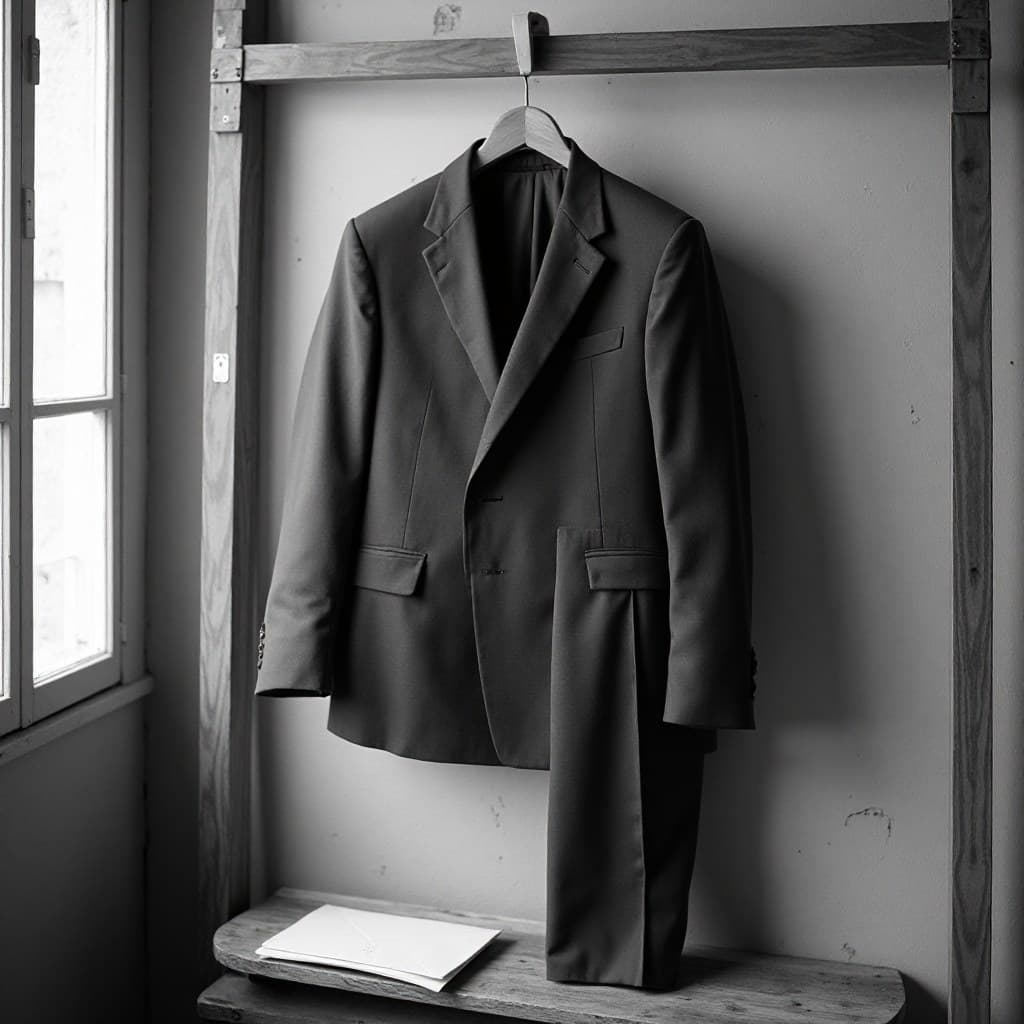
Made-to-Measure: Adjusting an Existing Pattern
Made-to-measure begins with an existing pattern. The tailor — or, in many commercial operations, a software system — adjusts a base block to a set of your measurements, modifying the chest, waist, and sleeve length to bring the garment closer to your body. The result is better than off-the-rack in nearly every case: fewer alterations, a more comfortable fit, a garment that reflects some of your preferences in cloth and detail.
But it remains, fundamentally, someone else's pattern with your measurements applied to it. The shape of the garment — the relationship between your shoulder and your chest, the way your back curves, the way you carry yourself — is not in the pattern, because the pattern was never designed for you. It was designed for an idealized body with standard proportions, and your measurements are being forced to conform to that ideal rather than the other way around.
Where Made-to-Measure Works
Made-to-measure works well if your body conforms reasonably closely to standard proportions. If you are a 40 Regular with a drop of six inches from chest to waist, a made-to-measure garment will fit you nearly as well as a bespoke garment, because the base block was designed for bodies like yours. If you are a 42 Long with sloped shoulders and a full seat, a made-to-measure garment will fit you poorly in the same places that off-the-rack fits you poorly, because the adjustments applied to the base block cannot compensate for the fundamental mismatch between your body and the idealized template.
Made-to-measure also works well if cost is a primary concern and you understand that you are trading precision for price. A made-to-measure suit costs less than a bespoke suit because it requires less labor — no pattern drafting, no basted fitting, fewer opportunities for correction. If that trade-off makes sense for your budget and your needs, made-to-measure is a reasonable choice. But it is not bespoke, and pretending otherwise does a disservice to both.
Bespoke: Creating a Pattern from First Principles
Bespoke begins with a blank sheet of paper. The tailor drafts a pattern from your measurements alone: every angle, every curve, every proportion is derived from your body and from nothing else. No block is adjusted; no base shape is modified. The pattern that results can be assembled into a garment that fits no other body in the world, because it was designed for no other body.
This is what makes bespoke genuinely different from everything else — not the handwork, not the cloth, not the price, though all of those matter — but the fact that the garment was conceived from your individual geometry. A bespoke pattern accounts for one shoulder being lower than the other, for a forward-leaning posture, for the particular way your chest tapers to your waist, for asymmetries that every human body possesses and that no standardized block can accommodate.
The Basted Fitting: Where Precision Happens
The basted fitting is the stage that separates bespoke from made-to-measure and justifies the additional cost and time. After the pattern is drafted and the cloth is cut, the garment is assembled with temporary white thread — a rough shell that can be adjusted, pinned, marked, and re-cut before the final construction begins. You try the garment on. The tailor assesses the fit in three dimensions, on your body, in motion. Corrections are made with chalk and pins. The shoulder seam is moved. The chest is let out or taken in. The sleeve pitch is adjusted.
This is the stage where a good tailor earns their fee. It is one thing to draft a pattern on paper based on measurements. It is another thing to see that pattern on a living body and recognize what works, what does not, and what needs to change. The basted fitting allows for corrections that would be impossible after the garment is fully constructed. It is the difference between theoretical fit and actual fit, and it is the reason bespoke garments fit better than anything else available.
Made-to-measure operations do not offer a basted fitting because the garment is constructed from a pre-existing block, not from a custom pattern. Adjustments are made to the finished garment, which means they are limited to the alterations that can be performed on a completed suit — taking in the waist, shortening the sleeves, adjusting the trouser hem. Fundamental fit issues — shoulder placement, chest shaping, sleeve pitch — cannot be corrected after the fact, because those are decisions that happen at the cutting table, not at the alteration bench.
The Cost Difference and What It Buys
Bespoke costs more than made-to-measure. This is not negotiable. Drafting a pattern from scratch, cutting a basted shell, conducting multiple fittings, and making corrections at each stage requires significantly more labor than adjusting a base block and constructing a garment in one pass. The question is whether that additional labor produces a result that justifies the additional cost.
For most clients, the answer is yes — but only if the fit problems they are trying to solve cannot be addressed by made-to-measure. If you have a standard body type and simply want a suit that fits better than off-the-rack, made-to-measure will serve you well at a lower price point. If you have a non-standard body type, if you have specific fit preferences that off-the-rack cannot accommodate, or if you have worn bespoke before and understand the difference it makes, the additional cost of bespoke is an investment in fit that will pay dividends every time you wear the garment.
The Longevity Argument
A bespoke garment, if properly cared for, will last twenty to thirty years. A made-to-measure garment will last ten to fifteen. The difference is construction quality, yes, but it is also fit quality. A garment that fits your body precisely will be worn more often, maintained more carefully, and kept longer than a garment that fits well enough. The cost-per-wear calculation over two decades makes bespoke the more economical choice for clients who intend to keep their suits for the long term.
This is not an argument for spending money you do not have. It is an argument for understanding what you are buying when you commission a garment and making the choice that serves your actual needs rather than the marketing language that claims to serve them. If you need a suit for a single season or a single event, made-to-measure is sufficient. If you are building a wardrobe that will serve you for decades, bespoke is the better investment.
Why L&S Offers Only Bespoke
At L&S, we practise only full bespoke. We do not offer a made-to-measure tier, and we do not use block patterns as a starting point for any commission. This is not snobbery — there are excellent made-to-measure operations, and they serve real needs. But it is a commitment to a specific standard of fit that requires working from scratch every time. The additional time and labour involved are not optional extras. They are what the word bespoke actually means, and they are why the garments we produce fit differently from anything a client has owned before.
When you book a consultation at L&S, you are commissioning a garment that will be drafted, cut, and fitted to your body alone. The pattern will be archived, and every future commission will build on the knowledge gained from the first. This is the advantage of bespoke: the fit improves with every garment, because the pattern is refined rather than recreated. Made-to-measure offers no such refinement, because the pattern is not yours — it is a shared template that changes with every order.
The choice between made-to-measure and bespoke is the choice between good enough and exactly right. Both have their place. Both serve real needs. But only one produces a garment that fits your body as if it were designed for no other purpose, because that is precisely what happened. That is what bespoke means. That is what we do. And that is the standard we maintain, because anything less would not be worth the name.
Experience It Yourself
Book a consultation at our East 61st Street workshop and discover the difference that fifty years of craft can make.
Book a Consultation