Why Your Shirt Matters More Than You Think
A bespoke shirt is the overlooked foundation of every well-dressed man's wardrobe. Here is why getting yours right transforms everything worn over it.
Most men own suits that cost ten or twenty times what they paid for the shirts underneath them. This is backwards. The shirt is the garment that touches your skin all day. It is the frame for your tie, the canvas beneath your jacket, and — when the jacket comes off — the garment that represents you entirely. A shirt that fits poorly will bunch at the waist, gap at the collar, and pull at the chest, and no amount of tailoring in the jacket above it can fix what is happening underneath.
At L&S Custom Tailors, we have made bespoke shirts for clients since 1974, and we have learned that the shirt deserves the same level of attention and craft as the suit it accompanies. When you commission a bespoke shirt from us, you are not buying a garment off a shelf and hoping it fits. You are having a pattern drafted specifically for your body, your posture, your preferences — and that pattern remains on file for future orders, ensuring consistency across your wardrobe for years to come.
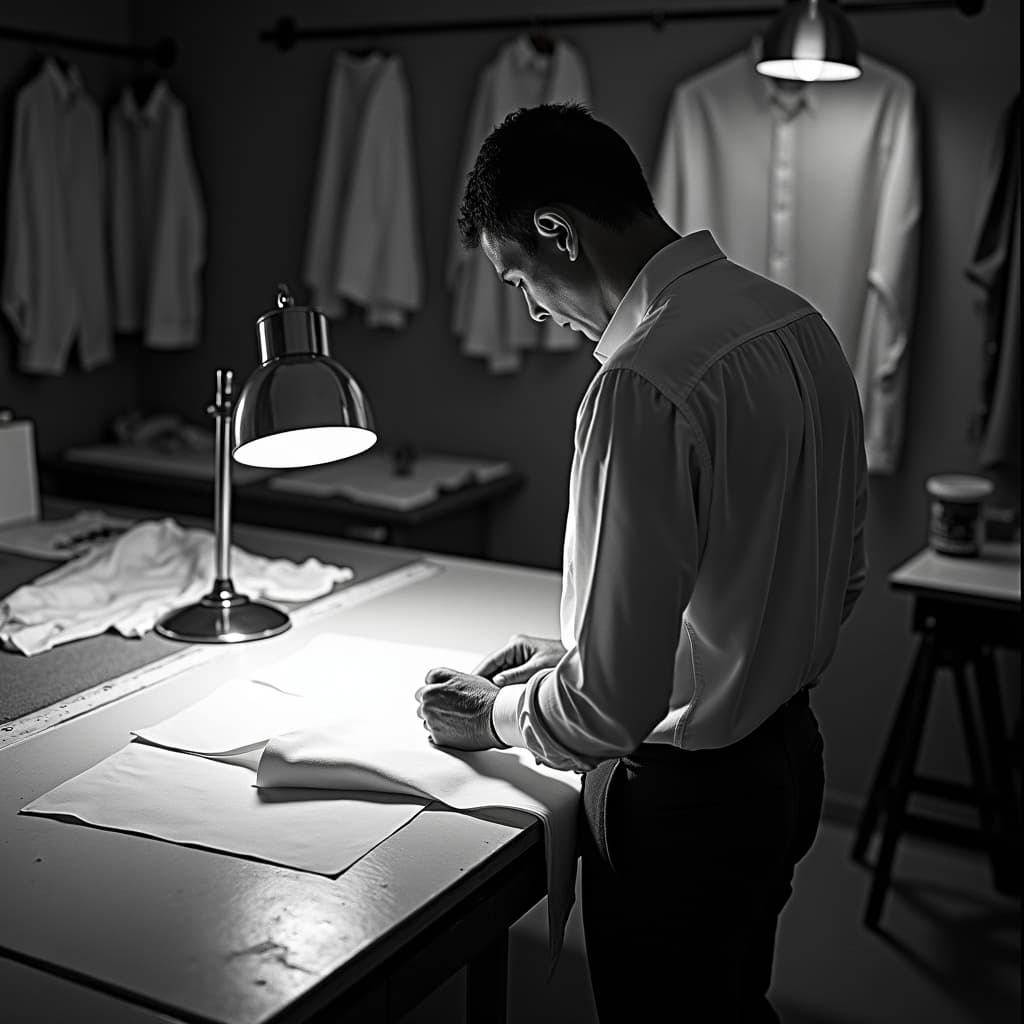
Why Fit Matters More Than You Think
The difference between a bespoke shirt and a ready-made one is immediately apparent the moment you put it on. A ready-made shirt is cut to a standardized set of proportions that assumes your shoulders are the same width as every other man with a 16-inch neck, that your chest and waist follow a predictable ratio, that your arms are symmetrical, and that your torso conforms to a template. None of this is true for most men, which is why most shirts fit poorly in at least three places.
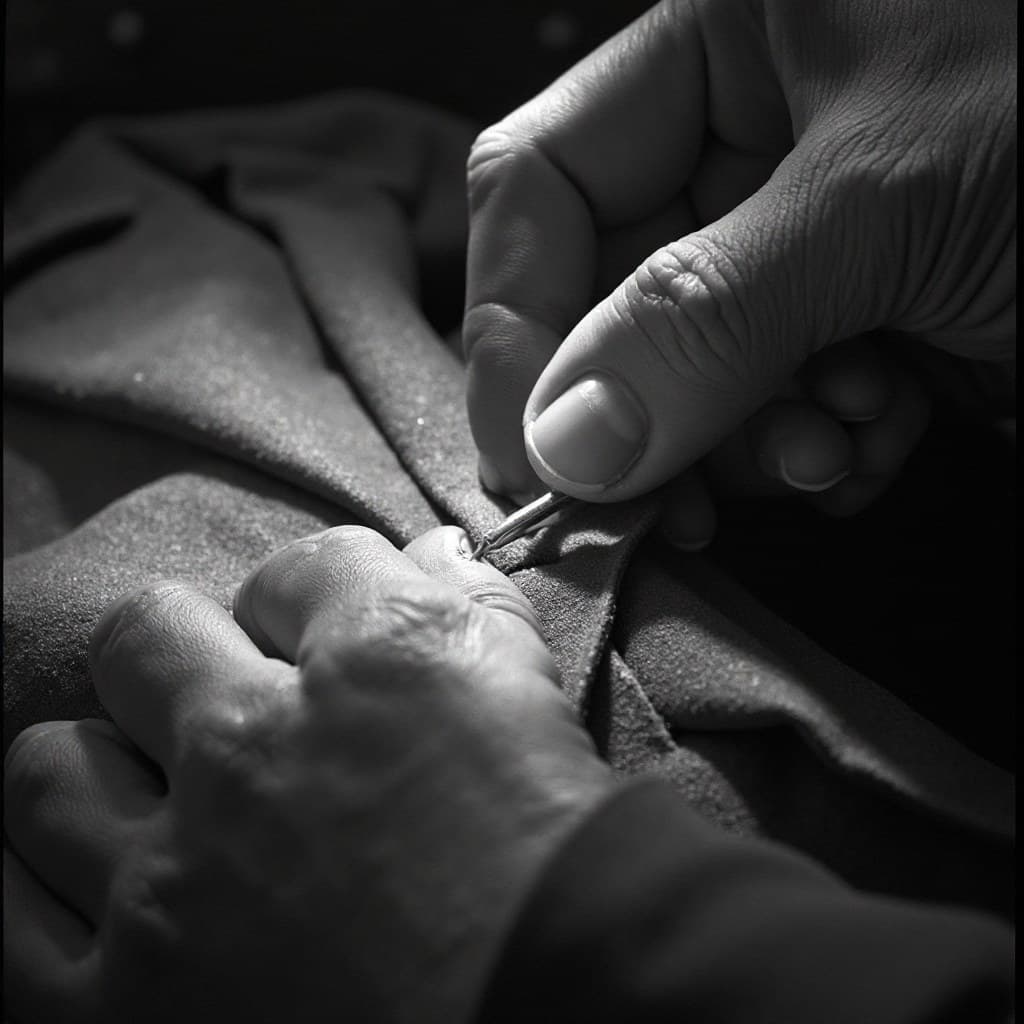
A bespoke shirt begins with a pattern cut to your individual measurements — not just neck and sleeve length, as with ready-to-wear, but shoulder width, chest circumference, waist suppression, back length, cuff circumference, and collar height. The collar is drafted to sit precisely against your neck, with the right amount of tie space and the correct point length for your face shape. The sleeve is set so that the cuff falls exactly at the wrist bone with your arm at your side and shows the proper half inch below your jacket sleeve when your arm is bent.
The Collar: Where Most Shirts Fail
The collar is the most visible part of a shirt and the part where ready-to-wear most frequently fails. A collar that is too tight constricts movement and leaves a red mark by the end of the day. A collar that is too loose gaps at the back and collapses under the weight of a tie. A bespoke collar is drafted to your exact neck circumference with a quarter-inch of ease for comfort, and the collar band is shaped to follow the angle of your neck rather than sitting flat against it. The difference is subtle in description but unmistakable in practice — the collar sits where it should, does what it should, and requires no adjustment throughout the day.
Cloth Selection: The Foundation of Longevity
Cloth selection for shirting is a world unto itself. Two-fold poplin in 100s or 120s cotton is the standard for business — smooth, crisp, and durable enough to withstand weekly laundering for years. Oxford cloth, with its slightly nubby texture, is the foundation of smart-casual dressing and softens beautifully with every wash. Twill weaves add subtle texture and resist wrinkles better than poplin. And for evening wear, a fine marcella or piqué front provides the correct formality without the stiffness of a plastron.
We source our shirtings from Thomas Mason, Alumo, and David & John Anderson — mills that have been weaving cotton for longer than most countries have existed. These are not luxury brands in the fashion sense. They are working mills that produce cloth for shirtmakers who care about quality over marketing. The difference between a shirt made from Thomas Mason two-fold poplin and one made from commodity cotton is the same as the difference between a bespoke suit and a department-store purchase: one is built to last twenty years, the other is built to last two seasons.
How to Choose the Right Cloth
During your shirt consultation, we will show you our cloth books and discuss what you need from your shirts. If you work in a formal environment where you wear a tie daily, you will want smooth poplin or fine twill in classic whites and blues. If your wardrobe leans more casual, Oxford cloth and chambray provide texture and ease. If you travel frequently, wrinkle-resistant weaves like herringbone or hopsack will serve you better than crisp poplin. There is no single best choice — only the choice that fits your life, your climate, and your preferences.
Construction Details That Matter
The details that distinguish a bespoke shirt from everything else are small but cumulative: hand-sewn buttonholes on the collar and cuffs, split yokes that follow the slope of each shoulder independently, single-needle side seams that lie flat against the body, and mother-of-pearl buttons that will never crack or yellow. These are not luxuries. They are the baseline of how a shirt should be made, and once you have worn one, the compromises of ready-to-wear become impossible to ignore.
A split yoke, for instance, allows the back of the shirt to conform to your shoulders rather than pulling against them. Most ready-to-wear shirts use a single-piece yoke for speed and cost savings, which creates tension across the upper back when you sit or reach forward. A split yoke eliminates that tension entirely. Similarly, single-needle side seams — where the seam is sewn with one needle in two passes rather than two needles in one pass — produce a flatter, more durable seam that does not twist or pucker over time.
The Importance of Proper Laundering
A well-made bespoke shirt will last fifteen to twenty years if properly cared for, but improper laundering will destroy even the finest shirting in a fraction of that time. We recommend professional laundering for dress shirts — not dry cleaning, which weakens the fibres, but proper wet washing and pressing. For casual shirts, home laundering is fine, but avoid high heat in the dryer. Line drying or tumbling on low heat will preserve the cloth and prevent shrinkage. A bespoke shirt is an investment, and like any investment, it rewards proper maintenance.
Why Commission a Bespoke Shirt
If you have worn bespoke suits for years but still buy your shirts off the rack, you are compromising the fit of your entire wardrobe. A poorly fitted shirt undermines the jacket above it. A well-fitted shirt completes it. When you book a consultation at L&S, we will discuss shirts as part of the larger conversation about how you dress, what you need from your wardrobe, and how we can build garments that serve you for decades rather than seasons.
The process is straightforward: we take measurements, you choose cloth and collar style, we draft a pattern and cut a sample shirt, you return for a fitting, and we make any necessary adjustments before cutting the final garments. Once your pattern is established, future orders require no fitting — you simply choose your cloths and details, and we cut to your existing pattern. That is the advantage of bespoke. Once the work of fitting is done, it is done for good. The pattern remains, and every shirt that follows fits exactly the same way.
Experience It Yourself
Book a consultation at our East 61st Street workshop and discover the difference that fifty years of craft can make.
Book a Consultation