The First Fitting: What to Expect at L&S
What to expect at your first fitting at L&S — measurements, conversations, and the decisions that set every bespoke commission in motion on East 61st Street.
Most first-time clients arrive with a degree of uncertainty they cannot quite name. They have read about bespoke tailoring, perhaps seen photographs, maybe even watched a documentary about Savile Row. What they have not done is stand in a tailor's workroom while someone measures the slope of their left shoulder against their right, or discusses the particular way they carry weight through the chest. That uncertainty — that exposure — is normal. We have seen it in every new client who has walked through our door on East 61st Street, from the twenty-eight-year-old commissioning his first serious suit to the sixty-year-old partner who built his career in off-the-rack and is finally, quietly, doing something different.
When you book a consultation at L&S Custom Tailors, you are not walking into a showroom designed to sell you something you do not need. You are walking into a workshop where suits are made, and where the first conversation is about understanding what you actually need from your wardrobe. The first fitting is not a transaction. It is the beginning of a relationship between you, your tailor, and the garments that will serve you for the next two decades.
What Actually Happens at the First Fitting
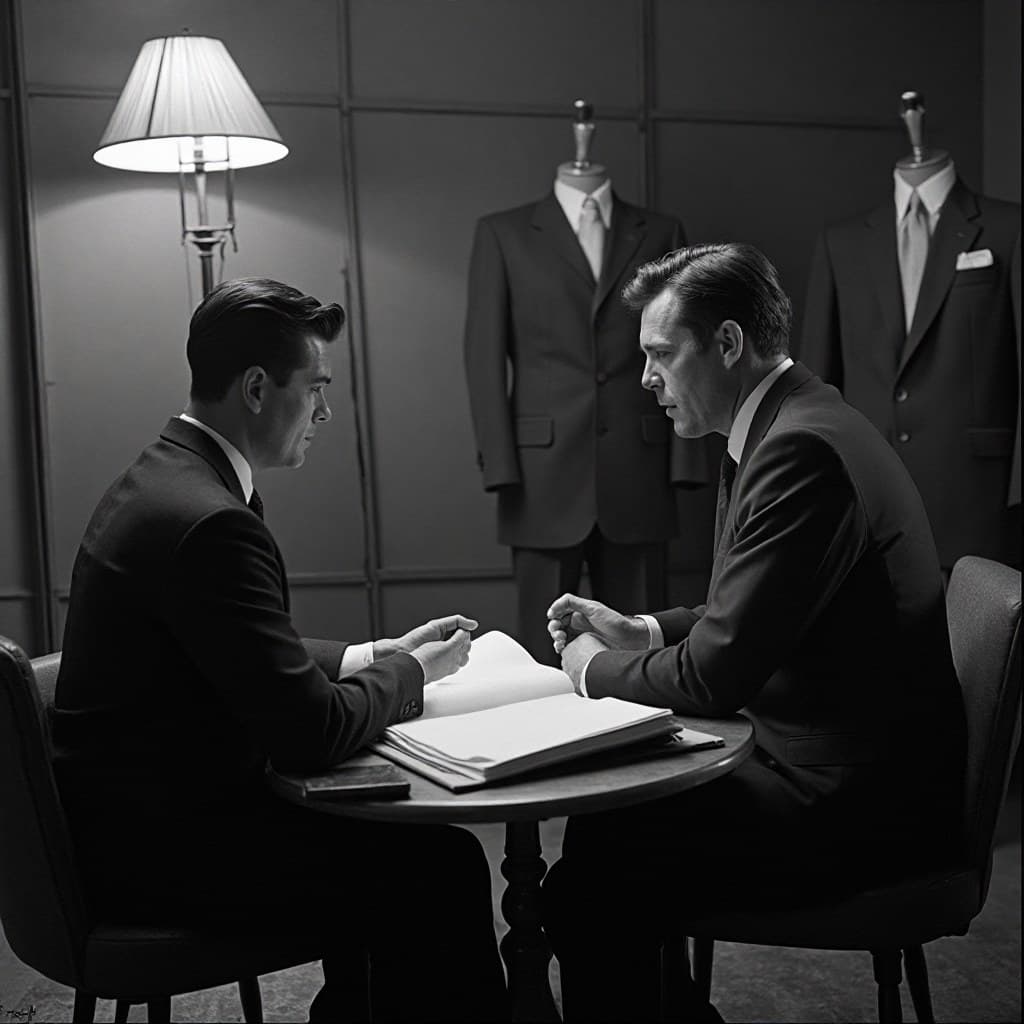
What actually happens at a first fitting at L&S is straightforward: we measure, we look, and we listen. Roughly thirty measurements are taken — not just the standard neck and sleeve length you might give a shirtmaker, but the slope of each shoulder individually, the distance from your natural waist to your crotch (the rise, which ready-to-wear gets wrong more than any other measurement), the circumference of your chest at the high point and the low, the length of your back and your front separately.
These measurements go into a pattern that lives in our archive. They are not a starting point for adjusting a block. They are the foundation of a garment designed for no one else. This is the essential difference between bespoke tailoring and everything else: the pattern is created for your body, not adapted to it. The measurements we take on your first visit will be referenced every time you commission a garment from us, whether that is next year or ten years from now.
The Measurements That Matter
The measurements themselves are not mysterious, but they are comprehensive. Chest at the high point. Chest at the low. Natural waist. Seat. Thigh. Rise front and back. Shoulder width. Sleeve length from shoulder to wrist. Sleeve length from center back. Collar circumference. Collar height. Chest across the front. Chest across the back. The distance from your natural waist to the bottom of your trouser. Each shoulder independently, because most men carry one shoulder slightly higher than the other.
These are not guesses. These are not estimates. These are precise measurements taken with a cloth tape by a tailor who has measured thousands of bodies and knows which variations matter and which do not. The data that emerges from this process becomes the blueprint for every garment we make for you, and it improves with every commission as we learn more about how your body moves, how you wear clothes, and what adjustments produce the best result.
The Conversation: Understanding Context and Preferences
The conversation matters as much as the measurements. We ask where you plan to wear this suit, what you already own, what has never fit you properly in the past. We ask whether you like a soft shoulder or a structured one, whether you tend to sit through long meetings or spend your days on your feet. We pull cloths from the shelves and drape them over your shoulder in the workshop light. We do not try to sell you the most expensive option. We try to understand what you actually need, and then tell you, honestly, how to get it.
This is not a sales conversation. It is a diagnostic conversation. The goal is not to convince you to buy something you do not want. The goal is to ensure that when we build your garment, it solves the problems you came to us to solve. If you need a suit for courtroom work, we will recommend a different silhouette and cloth than if you need a suit for client dinners. If you spend your days on airplanes, we will discuss wrinkle-resistant weaves and travel-friendly construction. If you are commissioning your first suit and are uncertain about what you want, we will show you options and explain the trade-offs honestly.
Cloth Selection: The Foundation of the Garment
Cloth selection happens during the first fitting, and it is one of the most important decisions you will make. We carry books from the major mills — Huddersfield, Dormeuil, Holland & Sherry, Loro Piana — and we will show you what works for your intended use. A 10-ounce Super 120s worsted is the standard business cloth: smooth, durable, appropriate for year-round wear in an office environment. A 13-ounce flannel is the choice for fall and winter: textured, warm, forgiving of wrinkles. A 7.5-ounce fresco is the summer option: breathable, light, designed for hot weather without looking casual.
We do not push clients toward the most expensive cloth. We push them toward the right cloth. A $200-per-yard Super 180s may look magnificent in the sample book, but it will wear thin in two years if you are hard on your clothes. A $100-per-yard worsted will last a decade if it is the correct weight and weave for your needs. The cloth is not a status symbol. It is the material from which your suit will be built, and it should be chosen for durability, appropriateness, and comfort — not for the number on the label.
The Timeline and What Comes Next
Before you leave, you will know the approximate timeline for your commission — typically six to eight weeks, with a basted fitting midway through construction — and you will understand exactly what decisions still need to be made. The uncertainty you arrived with will have been replaced by something more useful: clarity. That clarity is what a first fitting at L&S is designed to produce. The suit it produces is only the beginning.
The basted fitting, which happens roughly three weeks after your first visit, is where the pattern is tested on your body in three dimensions. The garment is assembled with white thread — temporary stitching that allows us to make adjustments before committing to the final construction. We look at the shoulder seam, the chest, the waist, the sleeve pitch. We mark corrections with chalk. We pin and adjust. This is where fit is refined from good to perfect, and it is the stage that separates bespoke from made-to-measure.
After the basted fitting, the garment goes back into the workshop for final construction. The canvas is basted. The lining is set. The buttonholes are hand-sewn. The lapels are hand-padded. The trouser is cut and assembled. The entire process takes another three weeks, and at the end of it, you return for a forward fitting — a near-final check before pressing and delivery. If everything is correct, the suit is pressed, finished, and delivered within a week. If adjustments are needed, they are made, and you return for a final check.
Why the First Fitting Matters
The first fitting is the foundation of everything that follows. It is where we learn your body, your preferences, your needs, and your context. It is where you see our workshop, meet the tailors who will build your garment, and begin to understand what bespoke actually means in practice. If you have been wearing off-the-rack suits for years and are considering bespoke for the first time, the first fitting is where that transition begins. If you have worn bespoke before and are trying L&S for the first time, the first fitting is where we earn your trust.
The process is not intimidating. It is not exclusive. It is not designed to make you feel as though you do not belong. It is designed to produce a garment that fits your body better than anything you have owned before, and to begin a relationship that improves every garment that follows. That is what happens at a first fitting. That is what we have been doing on East 61st Street for fifty years. And that is what we will continue doing for as long as there are clients who want suits built the right way.
Experience It Yourself
Book a consultation at our East 61st Street workshop and discover the difference that fifty years of craft can make.
Book a Consultation