The Overcoat: A Once-in-a-Decade Investment
A great overcoat is bought once per decade if chosen well. How to select the cloth, silhouette, and construction for a bespoke overcoat built to last at L&S.
Most men have owned several suits by the time they commission a bespoke overcoat. They have learned what fits, what they prefer, what a well-made garment feels like against the body. The overcoat is different. It is not, in any practical sense, something you buy more than once or twice in a lifetime. A good overcoat — properly maintained, properly stored, made from the right cloth — will outlast most marriages, most apartments, most careers. It is the garment in a man's wardrobe with the most potential for meaning, and the most potential for regret if the wrong choice is made.
At L&S Custom Tailors, we have made overcoats for clients that are still being worn twenty years later. We have seen fathers pass coats down to sons. We have seen coats move from New York to London to Hong Kong and back, serving their owners through decades of winters in different hemispheres. An overcoat is not a seasonal purchase. It is a permanent addition to your wardrobe, and it should be chosen with the same care you would give to any decision you expect to live with for two decades.
The Cloth: Weight, Texture, and Longevity
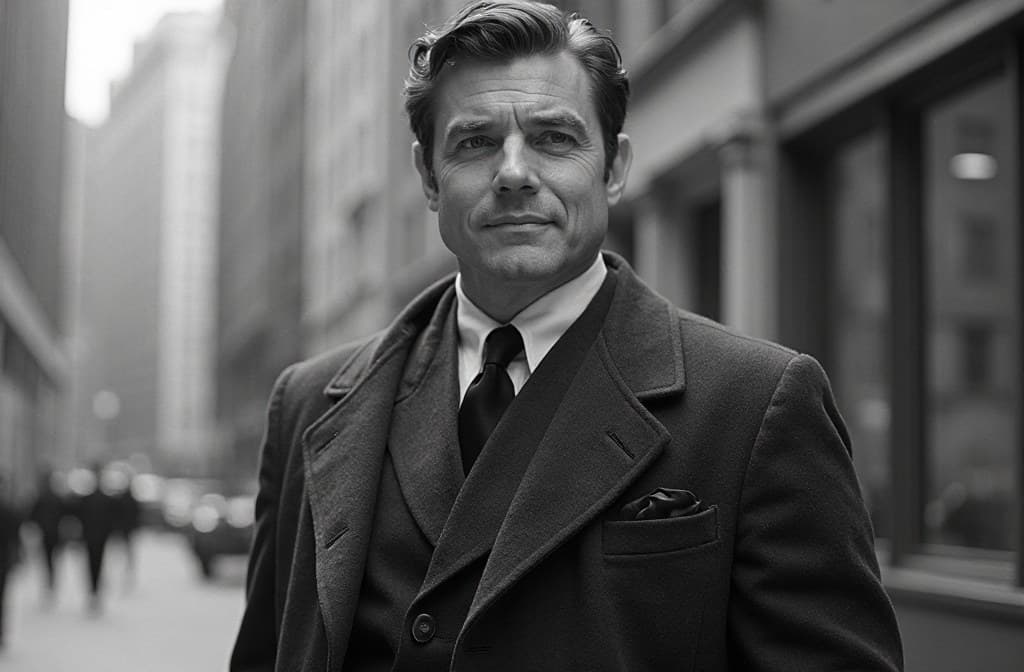
The cloth is everything. For an overcoat intended to last a decade or more, we recommend nothing lighter than 14 ounces and nothing heavier than 22 ounces, depending on the style and climate. Covert coating — a tightly woven twill in tan or olive, typically 15 to 18 ounces — is the classic choice for a single-breasted town coat: warm, naturally water-resistant, and possessed of a texture that becomes more beautiful with age.
Cashmere is the luxury option, unmatched for warmth and softness but more demanding to maintain. Pure cashmere overcoats are light, elegant, and extraordinarily comfortable, but they require careful storage to prevent moth damage and cannot withstand the abuse of daily urban wear as well as wool. A cashmere-wool blend — typically 80% wool, 20% cashmere — offers most of the softness with significantly better durability. This is the choice we recommend to clients who want the cashmere hand without the cashmere fragility.
Melton — a heavily milled wool with a smooth, near-napped surface — is the choice for a traditional double-breasted guard coat: architectural, serious, and built to endure. Melton is dense, wind-resistant, and nearly impervious to rain in light-to-moderate exposure. It is the cloth of naval officers' coats and policemen's greatcoats, and it has been proving its worth in harsh weather for over a century. A Melton overcoat is not subtle. It is substantial. It announces that you are dressed for the weather and prepared for whatever the city throws at you.
Choosing the Right Weight for Your Climate
The weight of the cloth determines how warm the coat will be and how it will drape. A 14-ounce covert coating is appropriate for moderate winters — New York, Boston, Washington — where temperatures rarely drop below twenty degrees Fahrenheit. An 18-ounce Melton is appropriate for colder climates — Chicago, Minneapolis, Montreal — where windchill and extended exposure are daily realities. A 22-ounce overcoat is rarely necessary unless you spend significant time outdoors in sub-zero conditions, and it can feel oppressive in milder winters.
The goal is to match the coat to your actual needs, not to your idea of what winter should require. If you spend most of your day indoors and your exposure to winter weather is limited to the walk from the subway to your office, a lighter coat will serve you better than a heavier one. If you walk everywhere, stand on street corners waiting for cabs, or spend weekends outdoors, you need weight and warmth. When you book a consultation for an overcoat, we will ask about your daily routine and recommend cloth weight accordingly.
Silhouette: Single-Breasted or Double-Breasted
The silhouette of an overcoat has changed very little in the past century for the simple reason that it is already correct. A single-breasted coat with a notch lapel and a moderate length — falling roughly to mid-thigh — can be worn over a business suit, a dinner jacket, or a weekend trouser without looking wrong. It is versatile, understated, and appropriate in nearly every context where an overcoat is required.
The double-breasted coat, with its wide peaked lapels and military closure, is the more dramatic choice: it projects authority and asks more of the man inside it. A double-breasted overcoat looks magnificent when worn correctly — over a suit, with the buttons fastened, on a man who understands that formality is not the same as stuffiness. It looks absurd when worn casually — unbuttoned, over jeans, by a man who has mistaken the coat for a costume. The double-breasted overcoat is the correct choice if you need a coat that commands attention. It is the wrong choice if you want a coat that simply works.
Length: Where Tradition and Proportion Meet
The length of an overcoat is a matter of proportion, not fashion. A coat that falls to mid-thigh — roughly forty inches from the collar to the hem for a man of average height — is the classic length and the most versatile. It covers a suit jacket completely, it does not interfere with walking or sitting, and it maintains a clean line from shoulder to hem. A longer coat — falling to the knee or below — is more dramatic and provides more coverage, but it can look heavy on shorter men and becomes cumbersome in crowded spaces.
A shorter coat — falling above mid-thigh — is more casual and works better for active wear, but it leaves the bottom half of your suit jacket exposed and breaks the line of the silhouette. We typically recommend mid-thigh length for most clients commissioning their first bespoke overcoat, with adjustments made based on your height and the cut of the suits you typically wear beneath it. The goal is a coat that looks intentional, not accidental — that was clearly chosen for proportion rather than defaulted to because it was available.
Construction and Details
An overcoat should be fully lined — typically in a quilted or flannel lining for warmth — with enough room through the chest and shoulders to accommodate a suit jacket beneath it without pulling or straining. The sleeves should be cut long enough that they extend past your jacket sleeves when your arms are at your sides, but not so long that they bunch when you bend your elbows. The collar should sit flat against your neck when the coat is buttoned, and the lapels should roll naturally without gapping or curling.
Details to consider: welt pockets versus patch pockets, a ticket pocket on the right side for train or theater stubs, a throat latch at the collar for windy days, and whether you want working cuff buttons or simulated ones. These are small choices, but they accumulate into a coat that feels personal rather than generic. When you commission an overcoat from L&S, we will walk through every option and ensure that the final garment reflects your preferences and your needs.
The Question of Lining Colour
The lining of an overcoat is the one place where personal expression is traditional and encouraged. A navy Melton overcoat with a bright red lining is a classic combination — serious on the outside, confident on the inside. A camel covert coat with a tartan lining in complementary tones adds texture and visual interest without being loud. The lining is what you see when you take the coat off, when you hang it over a chair, when you hand it to a coat check attendant. It is a signal of care and attention, and it is one of the few places where a flash of colour or pattern is entirely appropriate.
We will show you lining options during your consultation and recommend based on the colour and texture of the outer cloth. The goal is a lining that complements rather than clashes, that adds interest without overwhelming, and that ages as gracefully as the coat itself. A well-chosen lining is a detail that clients notice years after the coat is made, every time they put it on or take it off.
Where Will You Wear It?
When a client comes to us for an overcoat, we ask one question before any others: where will you wear it? A coat worn between a car and an office door is different from one worn walking ten blocks to a restaurant in January. The first can be lighter and less structured; the second needs weight, warmth, and a lining robust enough to handle daily movement in cold air. The answer shapes everything — the cloth, the lining, the structure, the length.
An overcoat should last long enough to be passed down. We build it accordingly. When you book a consultation at L&S to discuss an overcoat, you are not purchasing outerwear for the season. You are commissioning a garment that will be with you for decades, that will move with you through different cities and different stages of your life, and that will — if you choose well and care for it properly — outlast nearly everything else in your wardrobe. That permanence is what makes the overcoat worth doing right. That permanence is what we build into every coat that leaves our workshop.
Experience It Yourself
Book a consultation at our East 61st Street workshop and discover the difference that fifty years of craft can make.
Book a Consultation