Where the Cloth Comes From
The fabric is half the suit. An account of how L&S Custom Tailors sources cloth — the mills, the relationships, and what we are looking for when we handle a bolt.
The fabric is half the suit. This is not a figure of speech. A bespoke garment cut from mediocre cloth will always be limited by its raw material, regardless of how precisely it is made. And a fine cloth handled carelessly will never reach its potential. The relationship between tailor and textile is the foundation of everything we make, and it begins not in our workshop but in the mills — in the weaving sheds of the West Riding of Yorkshire, the looms of Biella and Como, the finishing rooms of County Donegal — where the cloth is made before we ever see it.
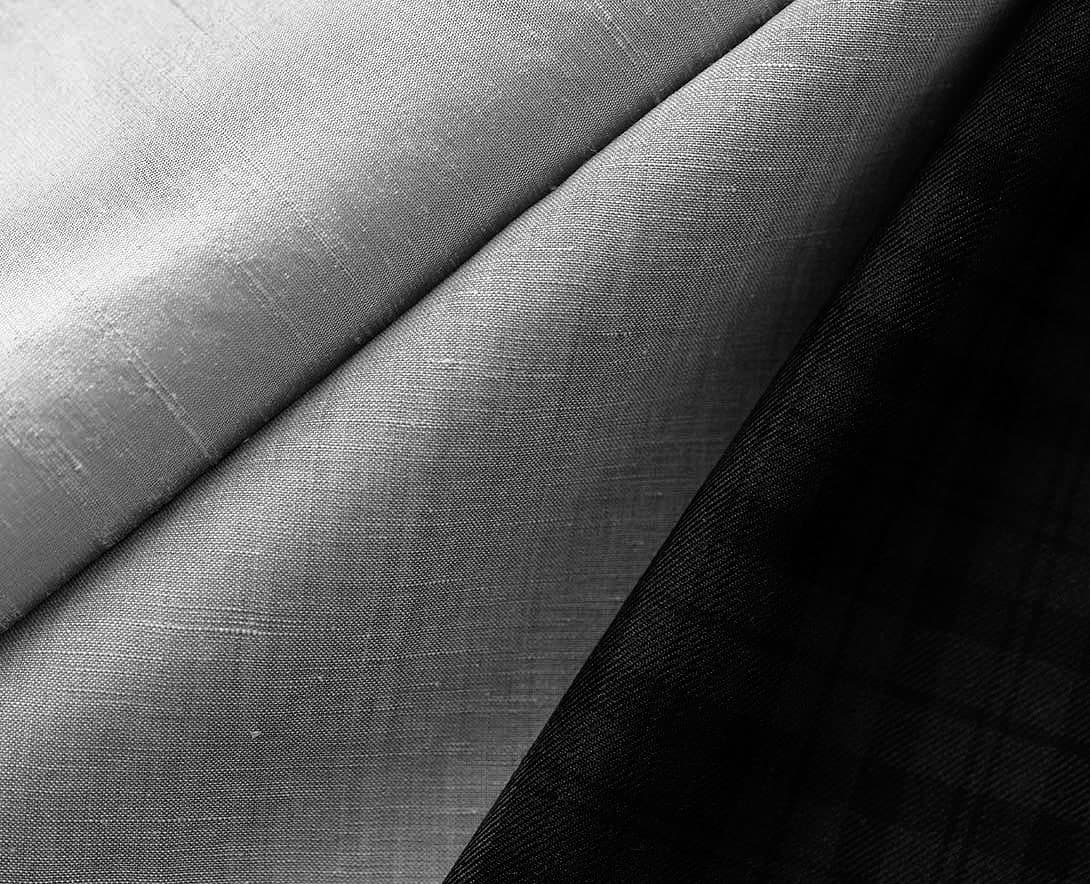
At L&S Custom Tailors, we maintain direct relationships with a small number of mills whose quality and consistency we have come to trust over decades. These are not transactional relationships. They are long-standing partnerships built on repeated orders, clear communication about what we need, and mutual understanding of what constitutes acceptable fabric for a bespoke garment. When a new collection arrives, we do not order it sight unseen. We request samples. We handle them. We cut them. We sew them. Only then do we commit to stocking a cloth in our fabric library.

English Mills: Precision and Heritage
Our primary English sources are Holland & Sherry, Dormeuil, and Dugdale Brothers — all mills with histories that run deeper than our own. Holland & Sherry have been weaving in Hawick since 1835 and maintain one of the most comprehensive cloth libraries in the world. Their Super 150s worsteds have a precision of weave that reveals itself most clearly in the way they hold a crease and recover from a long day. This is not about thread count as a marketing metric. It is about consistency of tension, evenness of dye, and predictability under the needle.
Dugdale's Bespoke bunches are a fixture in our workshop for the same reason they appear in the finest ateliers on Savile Row: consistent quality, wide colour range, and a cloth that behaves predictably under the iron and the needle. Dugdale operates one of the last vertically integrated woolen mills in England, which means they control every step from raw fiber sorting to final finishing. That degree of control produces a cloth that performs the same way in every bolt, every season, every year. These are not fashionable selections. They are foundational ones.
Why English Worsted Works
English worsteds are woven from long-staple wool that has been combed to align the fibers in parallel before spinning. The result is a smooth, tightly woven cloth with a crisp hand and a clean surface. It presses well. It holds a sharp crease. It sheds wrinkles overnight on a hanger. For business suits — the core of what most clients commission from us — English worsted is the default choice, and for good reason. It looks correct in every professional context from a Manhattan boardroom to a courtroom, and it wears well for years if properly maintained.
Italian Mills: Fineness and Drape
From Italy, we work primarily with Loro Piana, Caccioppoli, and Vitale Barberis Canonico. Loro Piana's dominion over fine fibres — baby cashmere, vicuña, Royal Alpaca — is well known, but it is their worsted and linen ranges that we reach for most often: cloths with a fineness of hand that Italian weaving achieves more naturally than any other tradition. The difference between an Italian and an English worsted of the same super number is not in the fiber fineness but in the finishing. Italian mills favor a softer hand, a more fluid drape, a slight nap on the surface that catches light differently than the smooth face of an English cloth.
Caccioppoli, based in Naples, produces cotton and cotton-silk blends that sit in a register that English mills rarely explore — slightly warmer in tone, more relaxed in drape, perfectly suited to the unstructured summer commissions we increasingly receive. These are cloths that pair naturally with the Sicilian soft-shoulder construction we practice at L&S. They do not want to be pressed flat. They want to breathe and move. When a client comes to us looking for a summer suit that can be worn without a tie and does not require dry cleaning after every wearing, we steer them toward Caccioppoli.
Vitale Barberis Canonico's Perennial and high-twist ranges are the workhorses of our warm-weather wardrobe recommendations. High-twist yarns create a cloth with excellent breathability and natural wrinkle resistance — qualities that matter enormously in New York between May and September. These cloths travel well, pack well, and recover quickly. They are not precious. They are practical.
How We Evaluate Cloth
What we look for when we handle a new bolt is not easily described in technical terms, though technical terms exist for all of it. We look at the selvedge for evenness of tension. We fold the cloth against itself to see how it recovers. We hold it to the light to read the density of the weave. We pass it between the fingers to feel the twist in the yarn and the finish on the surface. We smell it — a fine wool has a particular warmth that polyester blends do not.
And we drape it over a shoulder, because a cloth that does not drape well will not make a suit that drapes well, regardless of how it is cut. Drape is not a secondary consideration. It is a primary one. A cloth that hangs stiffly will produce a jacket that looks like a shell. A cloth that collapses without body will produce a jacket that looks rumpled within an hour. The sweet spot — enough weight to hold a line, enough fluidity to move naturally — is where we look for every bolt we stock.
The bolt that makes it onto our shelves has passed every one of these checks. The bolt that does not goes back to the mill. This selectivity is not about snobbery. It is about ensuring that when a client books a consultation and spends an hour choosing cloth, every option presented to him is one we would be proud to cut and sew. The fabric is half the suit. We treat it accordingly.
Experience It Yourself
Book a consultation at our East 61st Street workshop and discover the difference that fifty years of craft can make.
Book a Consultation