Why L&S No Longer Does Alterations
Effective July 1, 2026, L&S Custom Tailors no longer performs alterations. An honest explanation of why — and what it means for the clients we serve.
For most of our fifty years on East 61st Street, alterations were a part of what we did. A client would bring in a suit from elsewhere — a department store purchase, an inherited garment, something that had served him well but no longer fit — and we would shorten a sleeve, take in a waist, re-hem a trouser. We did this work carefully and we did it well. But we did it because it was available to us, not because it was what we were built for. Beginning July 1, 2026, L&S Custom Tailors no longer performs alterations. This is a decision we have been working toward for some time, and it deserves a clear explanation.
The Difference Between Adjustment and Creation
Every hour spent adjusting a ready-to-wear garment is an hour not spent building a new one from scratch. Alterations demand the same skills as bespoke construction — pattern reading, cloth handling, precision cutting — but they do not produce the same result. A retailored suit is still someone else's suit with your measurements approximated into it. The shoulder is still set for another man's body. The chest canvas, if it exists, is still cut to a block. The work of fitting is done against a template rather than from first principles.
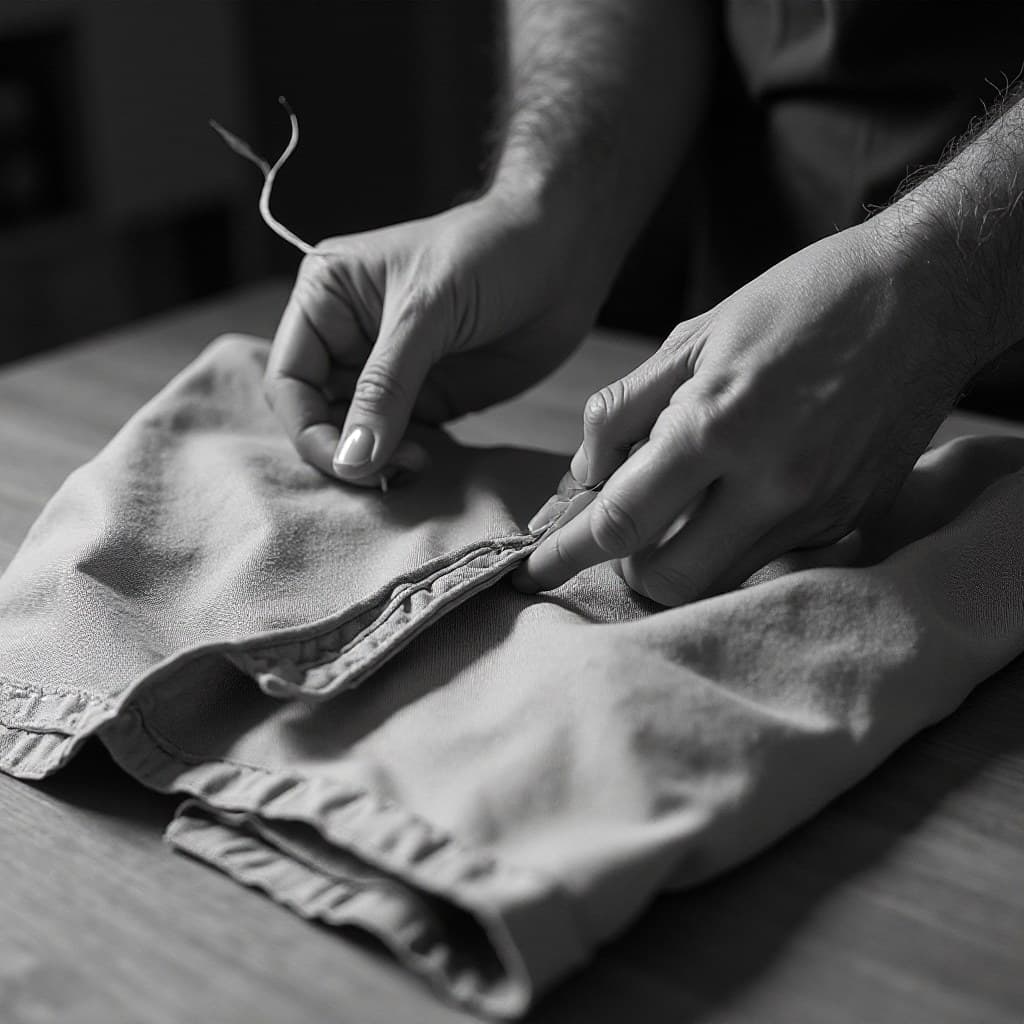
We take pride in our craft, and after five decades we have come to understand that our craft is the making of things, not the adjustment of things. There is a fundamental distinction between taking in a jacket that was cut for a 42 Regular and trying to make it work for a 40 Long, versus cutting a pattern specifically for a 40 Long from the beginning. The former is compromise. The latter is precision. When you visit L&S for a bespoke suit consultation, we start with your body, not with someone else's idea of what your body should be.
The Limits of Retail Tailoring
Even the finest alterations cannot relocate a shoulder seam. They cannot restructure the way a lapel rolls or change the pitch of a sleeve. They cannot add canvas where there was only fusing, or rebuild a collar that was never properly set in the first place. These are architectural decisions that happen at the cutting table, not at the alteration bench. When a client brings us a garment that fits poorly in multiple dimensions, the honest answer is often that the garment should not have been purchased — that it was cut for a different body and no amount of skilled needlework will make it right.
This is not a failure of craftsmanship. It is a category error. Bespoke tailoring and retail alterations are different disciplines, and pretending otherwise does a disservice to both. A bespoke suit is built in stages — pattern, basted fitting, forward fitting, final — with corrections and adjustments possible at each step because the garment is still in assembly. An alteration works backward from a finished garment, attempting to undo decisions that were locked in when the cloth was cut. The former is iterative and additive. The latter is reactive and subtractive. Over time, we have come to understand that our workshop, our training, and our sensibility are optimized for the former.
A Question of Focus and Attention
There is also a practical argument. The clients we serve best are the ones who want a suit conceived for them alone — who want to sit with us for an hour choosing cloth and discussing silhouette, and then return three times over six weeks to see a garment emerge from nothing. Those clients deserve our full attention. Dividing our schedule between bespoke commissions and the constant flow of retail alterations — a hem today, a lining tomorrow, a collar repair next Thursday — fragments that attention.
A bespoke commission is a sustained relationship. It begins with a consultation where we discuss not just measurements but context: where the suit will be worn, what role it needs to play in your wardrobe, what you have liked and disliked about suits you have owned before. It continues through multiple fittings, each one an opportunity to refine not just fit but proportion, balance, and line. It ends with a garment that is yours in a way that nothing purchased off a rack can ever be. That process requires continuity of thought and memory — the tailor who cuts your pattern should ideally be the tailor who fits your basted shell, and the same tailor should be present for the forward fitting and the final.
When our schedule is punctuated by quick-turnaround alteration work, that continuity breaks. The tailor's attention shifts from the long game of building a garment to the immediate problem of fixing one. The rhythm of the workshop changes. The focus scatters. Removing alterations from our service menu is not about turning away work — we have never lacked for work. It is about protecting the kind of work we do best and the clients who come to us specifically for that work.
What This Means for Clients
For clients who have come to us over the years for alteration work, we understand this represents a change. We are grateful for that relationship, and we will gladly recommend trusted alterations specialists in the neighbourhood who handle fine menswear with the care it deserves. New York has no shortage of skilled alteration tailors, and many of them are better equipped than we are to handle high-volume, quick-turnaround work without compromising quality.
For clients who have always wanted to commission something of their own and have never quite made the call — this is an invitation. A first consultation costs nothing. A bespoke suit, built for you and no one else, lasts twenty years if properly cared for, and often longer. It is not the same kind of appointment as dropping off a pair of trousers to be hemmed. It is a better one. It is the kind of appointment that produces not just a garment but a relationship — with a workshop, with a craft, and with the idea that clothing can be made specifically for you rather than sold to you in the hope that it will be close enough.
We have spent fifty years learning what we are good at. This decision is a recognition of that learning, and a commitment to doing fewer things better. That is the work we were built for. That is the work we intend to keep doing.
Experience It Yourself
Book a consultation at our East 61st Street workshop and discover the difference that fifty years of craft can make.
Book a Consultation